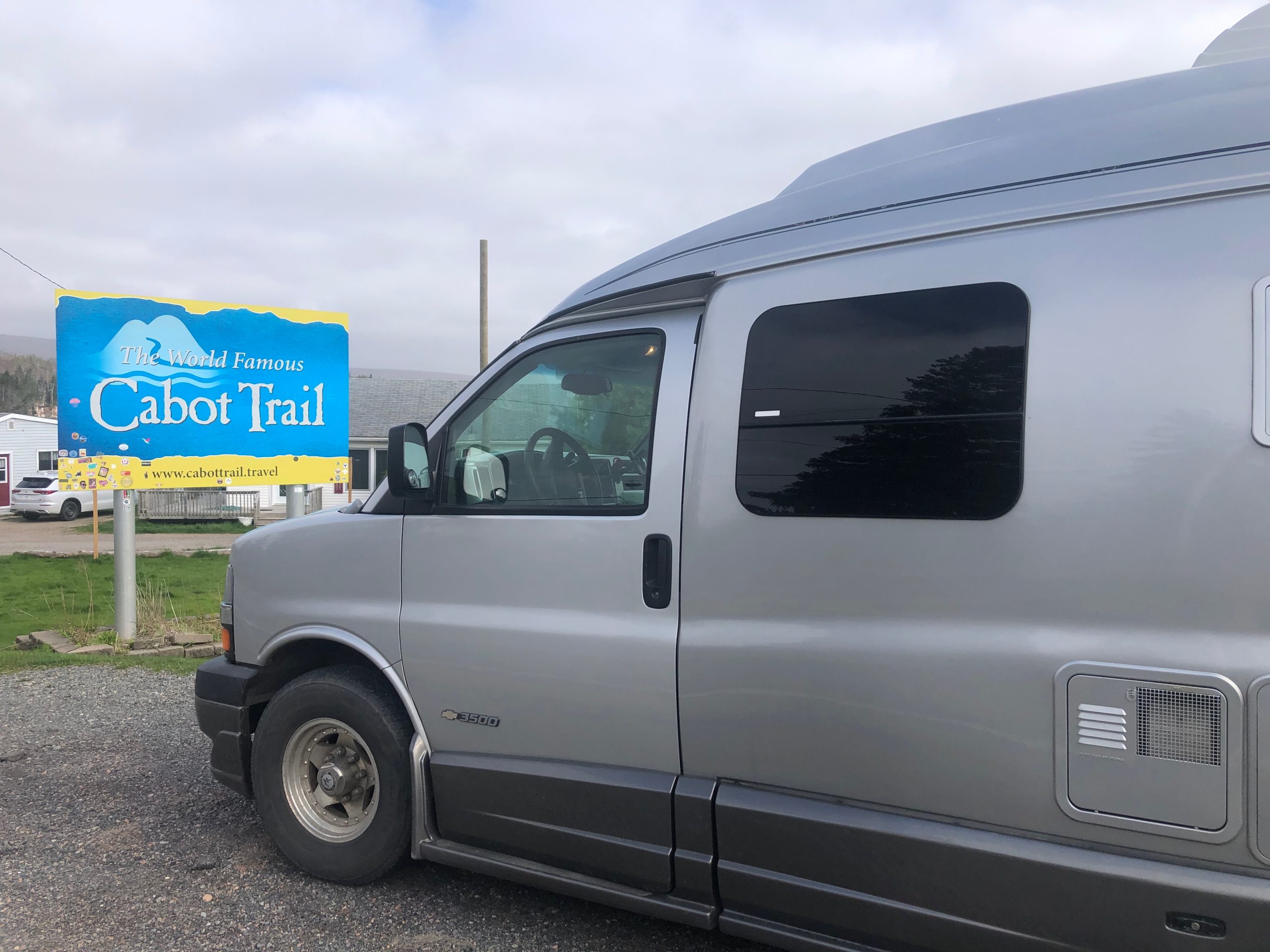
When that itch for a scenic road trip hits hard, it’s a challenge to find a spot more delightful than Cape Breton Island, perched a short drive from mainland Nova Scotia. The island is renowned for the rugged coastline drive along the jaw-dropping Cabot Trail . . . but there’s much more. Cape Breton is a hotbed of down-to-earth Celtic culture and music, as well as world-class sites to whet the appetite of any history buff.
GETTING THERE AND WHEN TO GO
Yes, Cape Breton is an island, but it’s a quick crossing at the Canso Causeway bridge (a part of the Trans-Canada Highway). Once on island, the debate begins: which route to follow? We were there for more than the Cabot Trail (and the island offers much more!), so opted to begin along the Highway 4 scenic drive, skirting the lower shoreline of Bras d’Or Lake and straight to the port region of Sydney/North Sydney, a hub for cruise ships and ferries. Using Sydney as a first base meant we were close to major sites like Parks Canada’s Fortress of Louisbourg. Further to the west, it’s a quick drive to pretty towns like Baddeck and the start of the famous Cabot Trail.
While the summer months have the best weather, they also have the largest number of visitors and vehicles. Shoulder seasons (late spring and early fall) work well for this part of Canada—attractions will be open, campground reservations are less of a challenge, and you may even have long stretches of the scenic drive to yourself.
DRIVING THE CABOT TRAIL
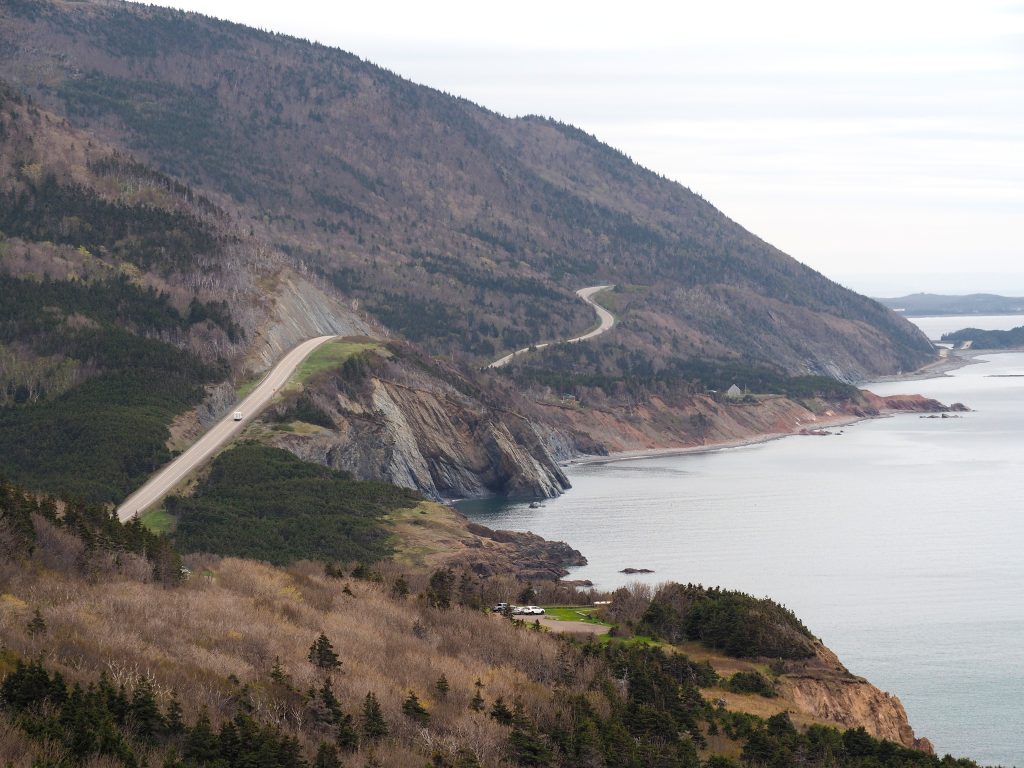
And here the debate begins: Drive the route clockwise or counterclockwise? We opted for counterclockwise beginning at Baddeck—“the start and end of the Cabot Trail”—to get the most dramatic cliffside views from the passenger side. It also made getting in and out of the many roadside pull offs much easier. Our vehicle is a Class B (camper van) and larger vehicles—say, a Class A, or towed rig—may find the rollercoaster-like rise and fall, hairpin turns of the Cabot Trail to be a white-knuckle experience. In that case, many RV visitors have suggested parking the large rig and renting a car for the daylong drive.
Named for the famous explorer who landed here in 1497, the 298-kilometre iconic highway could be done in a rushed day by RV, but why not take a leisurely approach, spending several overnights at campgrounds along the way? This is a driving experience to savour.
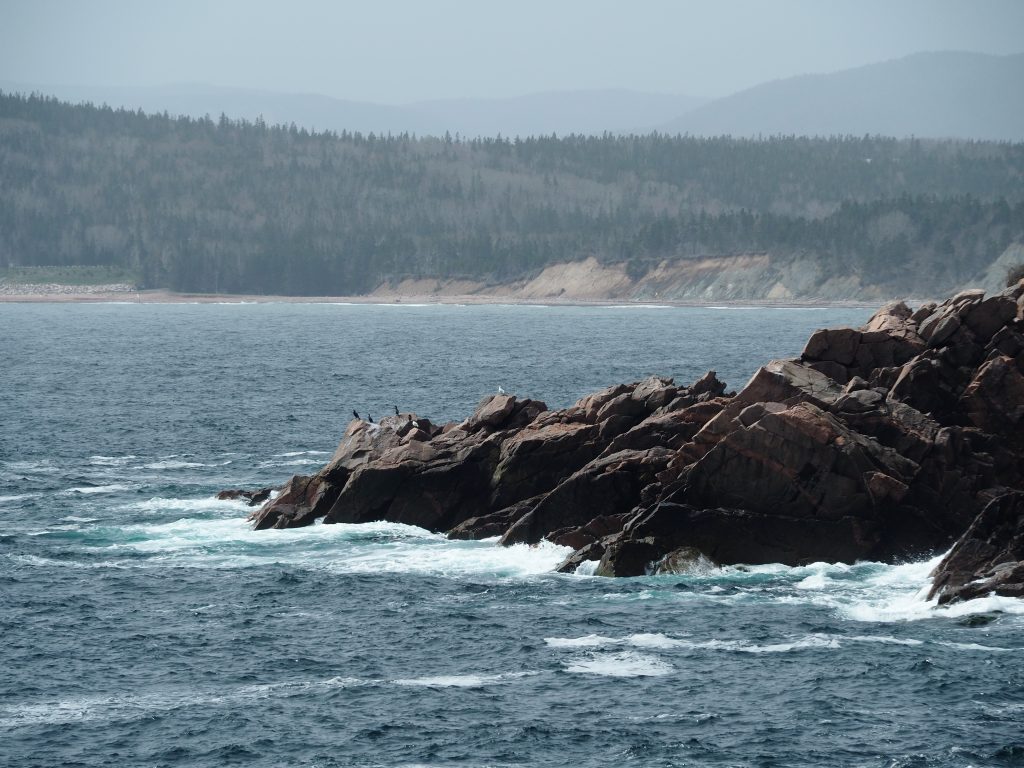
Our first day on the road north from Baddeck toward Ingonish was drizzly and windy. At some of the many highway pullovers, a howling Atlantic gale threatened to lift and blow us over the cliff into the bay below. In the distance, fishing boats bobbed in the water as nets were pulled aboard, cleaned, and then tossed out once more. The stretch near Cape Smokey snakes its way along a coast decorated with dramatic rock formations and beautiful views. If you have binoculars at the ready, it’s a treat to zoom in on the fishing crews and to keep an eye out for whales.
The area around the town of Ingonish is a cluster of resort-style amenities: beautiful beaches (look for the sign for Black Brook Beach), golf courses (including the Highland Links Golf Course, ranked as one of Canada’s best), hiking trails, restaurants, and whale watching tours. On a guided boat tour, you may see grey seals, minke, humpback or fin whales, dolphins and porpoise, puffins, and even leatherback turtles.
Ingonish is also an entry point to Cape Breton Highlands National Park, a jewel of the Parks Canada system. The park protects a large part of the northern stretch of the island, with seven front-country campgrounds, 27 hiking trails (from easy strolls to challenging climbs), and many striking ocean views. It’s well worth slowing your travel to explore villages like Neil’s Harbour and Cape North, visit an artisan studio, relish a bowl of steaming seafood chowder, or even detour to the northern tip at Meat Cove. The winding dirt road from Cape North to Meat Cove pops up regularly as a spectacular boondocking spot, though not suitable for larger RVs.
At Neil’s Harbour the roadway veers to the left, crossing the island from east to west and coming out at the Gulf of St. Lawrence near the fishing village of Pleasant Bay. This stretch is part of what made the Cabot Trail famous—especially the roller coaster drive up and down French Mountain and MacKenzie Mountain. There are many lookouts and pull-offs along the way. It’s at the top of French Mountain you’ll find the trailhead for the park’s most popular hike, Skyline.
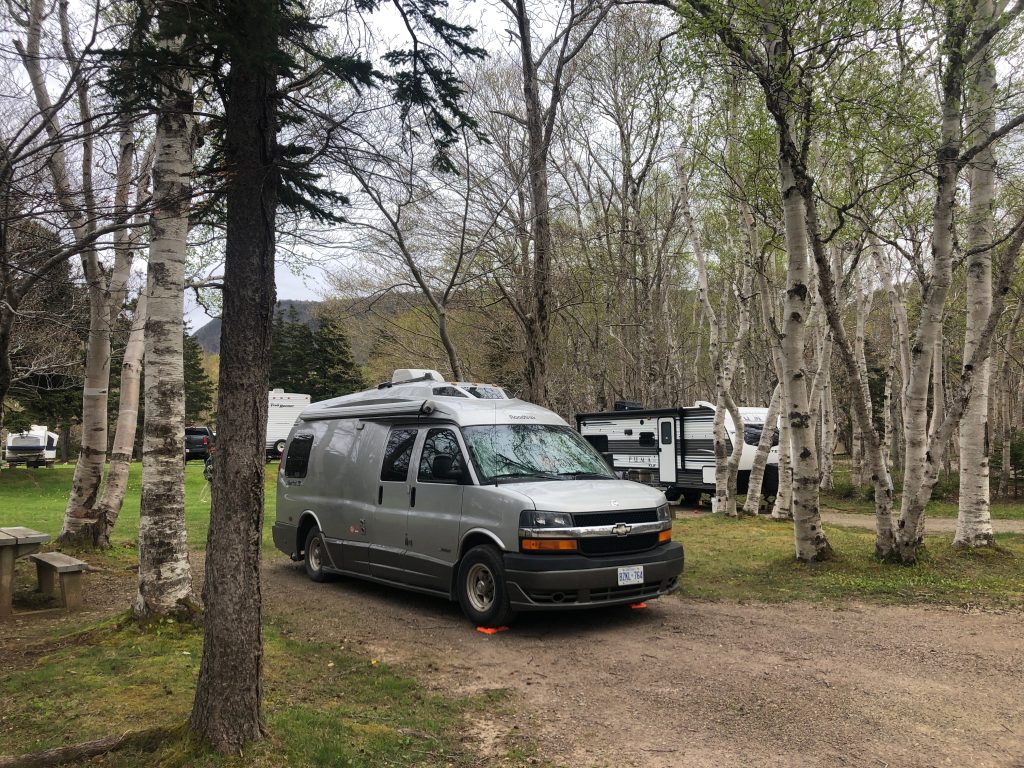
The roadway exits the national park at Chéticamp, a village with deep Acadian roots dating back to the 1780s. Known for its culture of co-operatives (from fishing to rug hookers), Chéticamp is a hub of needlework, rugs, folk art, and wood carvings. It’s also a launch site for whale watching cruises in the Gulf of St. Lawrence. A short drive from town the Chéticamp campground offers both wooded and open campsites (half have hookups), comfort stations, interpretive programs, hiking trails, and a visitor centre.
Continuing south the debate begins again: Stay on the southern part of the Cabot Trail and veer inland to Baddeck or follow the coastline on the Ceilidh Trail (Highway 19). We opted to follow the musical roots along the Ceilidh Trail (more on that below).
HISTORY FROM THE 1700S: FORTRESS OF LOUISBOURG
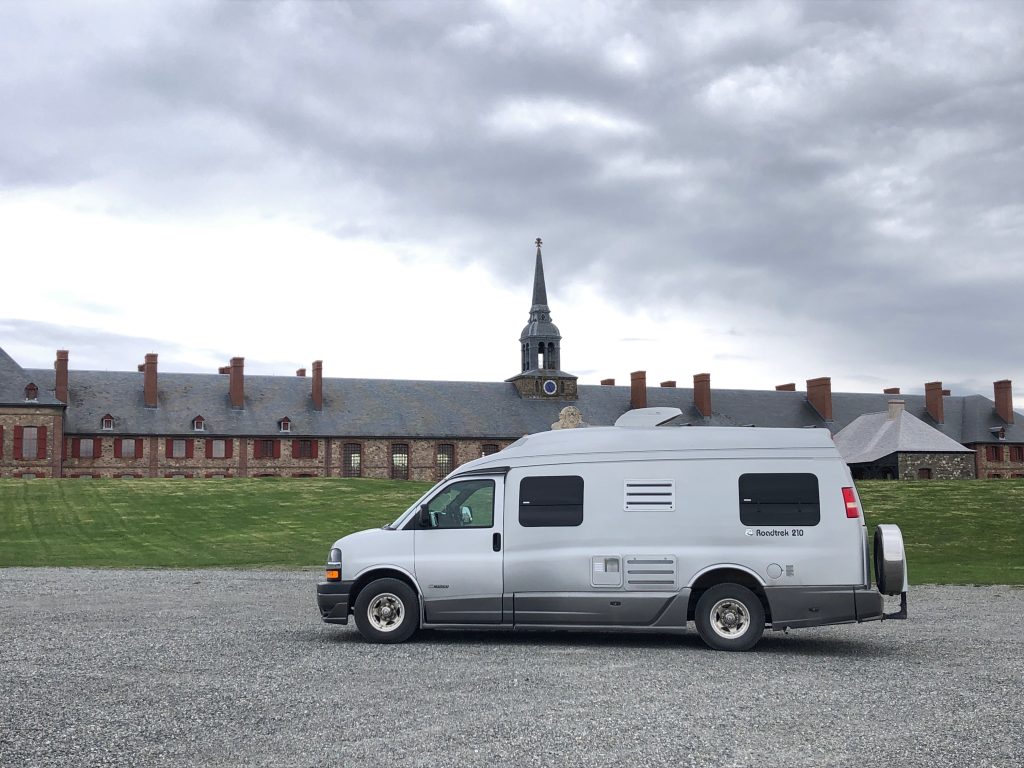
Park interpreter Kyle Allen has heard it all. “The waters around Cape Breton must be the Great Lakes” (No). “This piece of land is actually Newfoundland” (another No). The arresting Fortress of Louisbourg sits on Cape Breton Island to the southeast of Sydney and it’s the waters of the Atlantic Ocean that roll onto the shoreline. Now protected as a Parks Canada National Historic Site, the buildings and ramparts are a detailed reconstruction of one-quarter of the original site, built with close attention to the fort’s early plans and archaeological remains. Step behind the stone fortifications and you are in the 18th century, at a time when the busy harbour and colonial town were a show of France’s trade and military strength in the New World. It was an era when the cod fishery was even more lucrative than Upper Canada’s fur trade.
The fortress is dominated by the long King’s Bastion, encompassing the military chapel (attendance was required at the Catholic services), the apartments for the Governor and the priests, and the barracks for unmarried officers. Three men were assigned to a single bed space, sleeping in shifts in a system called “hot bunking.” Married officers and their families lived in homes in the village.
Louisbourg was a garrison town, so items from everyday life—clothing, sewing goods, tableware, smoking pipes, musket balls, fishhooks, chisels—were unearthed during the reconstruction process (and they’re still finding pieces). There are tens-of-thousands of artifacts in the park’s Archaeological Collection (tours arranged through Visitor Experiences)—in total it is the largest collection of 18th-century colonial material in North America.
HISTORY FROM A MORE “MODERN” TIME: ALEXANDER GRAHAM BELL
With AI on our doorstep, it’s worth taking a step back to where some early, groundbreaking technology has its roots. In the pretty town of Baddeck, the Alexander Graham Bell National Historic Site tells the story of the inventor best known for the telephone. Bell knew something about electricity and a lot about sound, speech, and hearing (he had a lifelong commitment to helping the deaf). In fact, the telephone was only the beginning of Bell’s lifelong pursuit of innovation. It was in 1876 that he transmitted the world’s first sentence over telephone: “Mr. Watson, come here. I want you!”
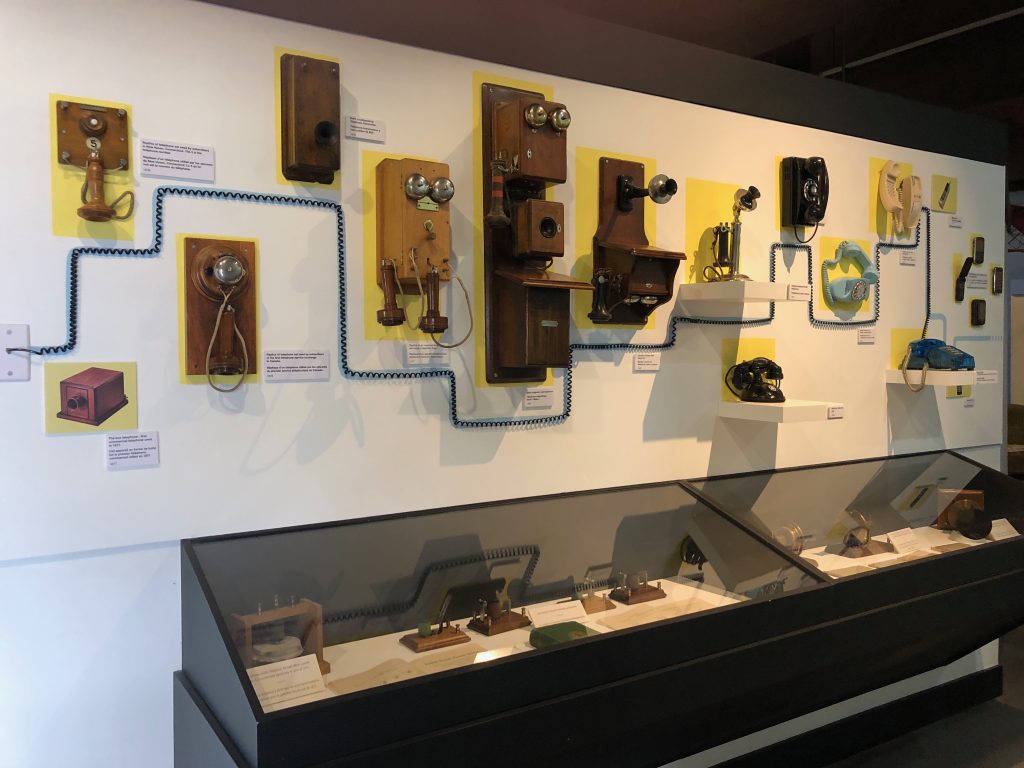
The museum is rich in the achievements of the Scottish immigrant who was captivated by the charm of Cape Breton, eventually building his second home near Baddeck. Among his lesser-known milestones and inventions are the co-founding of the National Geographic Society, creation of the photophone and vacuum jacket, kite flying experiments, and an obsession with flight. The museum is filled with artifacts including a timeline of the earliest wooden telephone through to modern-day cellphones, instruments used, and a full-scale replica of the groundbreaking HD-4 hydrofoil craft that set a world speed record in 1919. In 1909, Baddeck was the site of another Bell milestone: the first powered flight in the British Empire.
CELTIC MUSIC ROOTS RUN DEEP
Along the Gulf of St. Lawrence coastline of Cape Breton, the roots of Scottish music shine in the strong musical pedigree of the Ceilidh Trail. These small communities are Cape Breton’s musical heartland and home to world-class Celtic singers and fiddlers like Buddy MacMaster, Natalie MacMaster, John Allan Cameron, Ashley MacIsaac, and the Rankin Family.
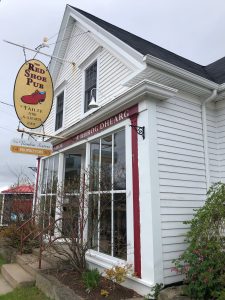
In the summer months, pubs, restaurants, and community halls are lit up with céilidhs—traditional Scottish and Irish gatherings of folk music, singing, storytelling, and lively step dancing. A must-do stop is The Red Shoe Pub in Mambu which is the musical home to members of the Rankin Family, who trace their roots back seven-generations in Cape Breton. Another musical highlight is the Celtic Music Interpretive Centre in Judique, a music venue and small museum with a self-guided exhibit room filled with traditional clothing and Celtic instruments, photographs, and interactive tuneboards pumping out jigs and reels, marches, clogs, and more. Sunday afternoons, stop by for lunch and the live céilidh.
THE LOCALS DON’T RUSH, SO NEITHER SHOULD YOU
It may be a spit of land just over a bridge, and you may think you can rush through quickly. Don’t. Cape Breton is worth taking your time, stopping at as many lookouts as possible to drink in the scenery, meet the locals, and marinate in a history-rich part of Canada. Savour every moment.
CAMPING
There are seven RV-friendly campgrounds in Cape Breton Highlands National Park. The campgrounds are open from mid-May to late October and Parks Canada is continuing its “Canada Strong” program with free admission and 25% off camping stays (June 19 to September 7, 2026).
We also stayed at the excellent Harvest Hosts organic farm Big Spruce Brewery near Baddeck.
MORE INFORMATION
https://novascotia.com/ and www.cbisland.com
An excellent guide to the province is The Nova Scotia Bucket List by Dale Dunlop and Alison Scott (Formac Publishing).
Related Articles
A Walk Above the Trees
With its snow-capped mountains and blue ocean, no wonder Vancouver has been voted one of the best cities in the world to live in. The Capilano River RV Park is situated in the best position for easy exploring. It was hard to believe that only a few months ago, I...
Authentic New Mexico
There are places we zoom through, places we slowly explore, and places so mesmerizing that it’s a challenge to keep moving. New Mexico falls into the latter category. It’s so magnetic and spellbinding that several weeks don’t seem enough. The state’s beauty lies in...
Will SpaceX Deliver Affordable Satellite Internet in 2021?
It was March 2020 and the Canadian government told Canadian citizens, RVers, snowbirds, and vacationers to return to Canada as soon as possible. The Canadian government made the call because of the health risk from the COVID-19 virus. Visibility was low due to...