Thinking of a cross-Canada adventure this summer?
Even if we didn’t have those dark clouds of tariffs or the 51st state comments hanging over us, there have always been good reasons to explore the world’s second-largest country in an RV!
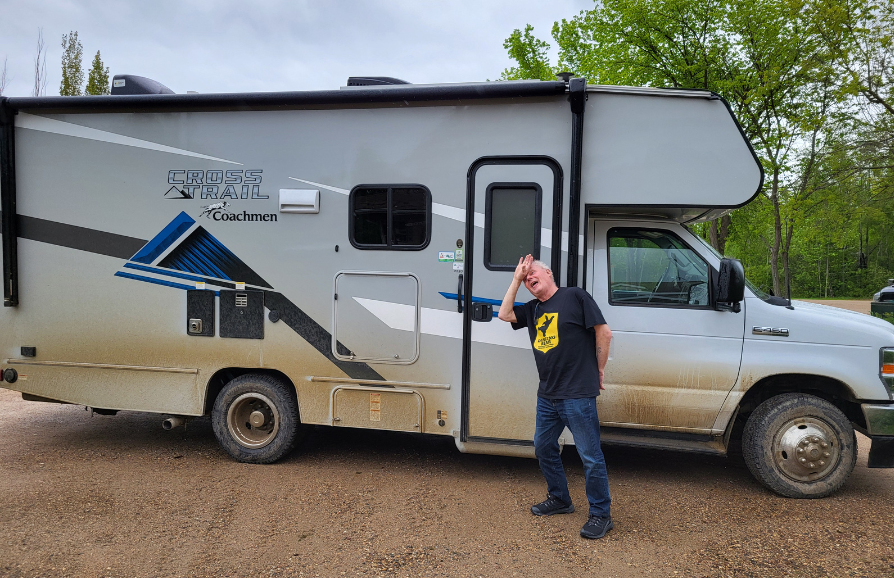
Martin and I had the privilege of doing just that. In one continuous trip from May to October last year, we drove more than 30,000 kilometres across Canada, dipping our toes in the Arctic, Pacific, and Atlantic Oceans — with a side trip to Hudson Bay en route.
“The real voyage of discovery consists not in seeking new landscapes but in having new eyes.” – Marcel Proust
Here are five lessons learned from those five months of adventures that I hope will be helpful in your own planning:
1. A road well-travelled is one shared with friends.
A journey is measured in friends rather than in kilometres – Adapted from Tim Cahill
A top priority for this road trip was to reconnect with friends, family, and favourite co-workers — many of whom we hadn’t seen post-COVID and, in a few cases, for over a decade. Yes, the scenery was spectacular, but connecting with people we’ve shared a lifetime of experiences with was the greatest takeaway from the trip.
We visited former students in Vancouver and The Pas; former fellow teachers in Edmonton, Terrace, and Yorkton; former co-workers in Regina, Calgary, and Kelowna; and friends and family on Vancouver Island, Canmore, Hardisty, Ottawa, Saint-Sauveur-des-Monts, Halifax, and Charlottetown. Some are not in good health, and I was reminded yet again of the passage of time.
Woodrow Wilson is credited with saying, “Friendship is the only cement that will ever hold the world together.”

2. Learning from the Land and Its People
“Teachings come from everywhere when you open yourself to them. That’s the trick of it — to open yourself to everything, and everything opens itself to you.” – Richard Wagamese
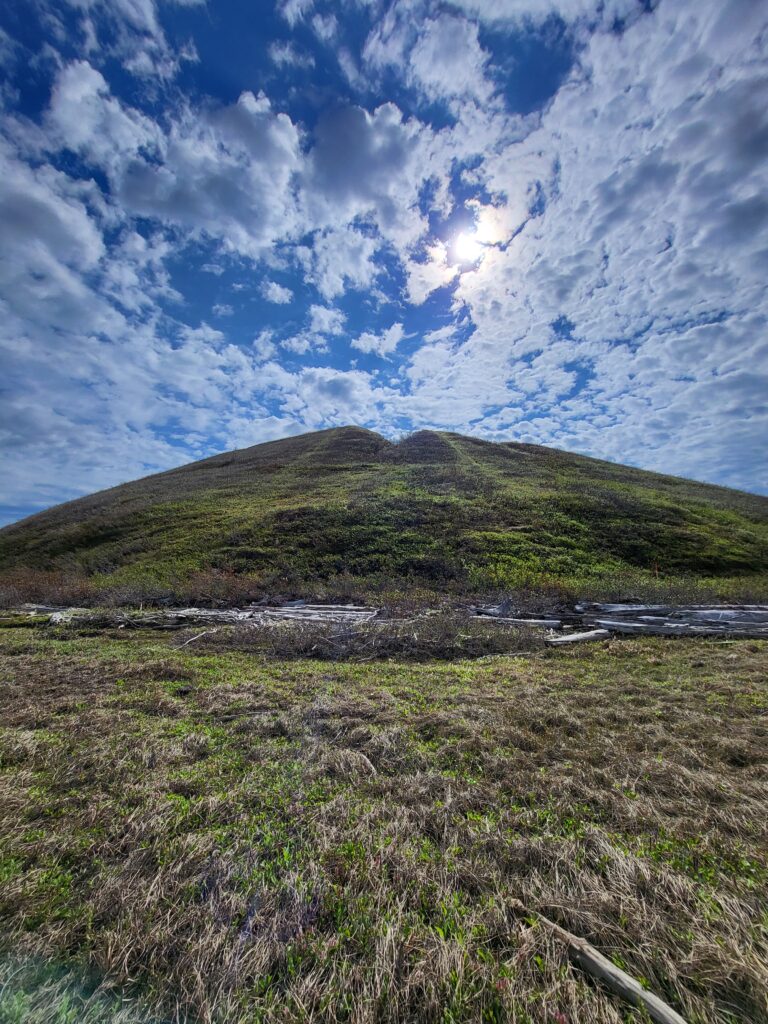
My ancestors were not the original inhabitants of this vast and diverse country now called Canada. I value the opportunities I had during our road trip to increase my understanding and awareness of the impacts of colonialism. Speaking with an elder on the train to Churchill who wore a button with the photo of her missing and murdered niece. Learning from her husband as he talked about his fishing and hunting just before they disembarked at a whistle-stop with their grandson. Hearing about the impacts on the local populations of building the Alaska and the Dempster highways. Spending a day in the land of the midnight sun, travelling down the Mackenzie River to the mouth of the Arctic Ocean, and learning about the role of the Inuvialuit Regional Council and the challenges of climate change. Meeting some elders in Tuktoyaktuk who shared some of the history of the settlement. Tasting muktuk, smoked whitefish, and reindeer burgers. I met a 60’s scoop woman raised in Brantford, Ontario. I heard about the joys (and challenges) of integrating into a new life in Inuvik, spending time in Gaspe, and learning about the Mi’kmaq culture.
I want to share a story about when we were in Fort McPherson on June 21, National Indigenous Peoples Day, a day designated for Canadians to “come together, reflect on, and celebrate the unique heritage, traditions, and knowledge of First Nations, Inuit, and Métis Peoples.” Standing outside the Northern Store, I chatted with a young man dressed head to toe in Oilers regalia. (Full disclosure: The Oilers are “my” team from when I lived in Edmonton during the Gretzky days.) The Oilers would be heading into Game 6 against the Florida Panthers that night. During our conversation, he invited me (and Martin) to a pow-wow and celebration at the local sports field later that afternoon. I deeply regret that I declined his invitation based on what I now understand was a flawed assumption that I would be seen as an intruder. A few days later, further down the road, I met some RVers who had attended the celebration. They said they felt welcomed and appreciated learning more about the area’s history and culture.
As you can see from this story, there is much more for me to learn, and I am deeply grateful to the people who shared their perspectives with me.
3. Be kind and remember that services are on the left
“To extend yourself in kindness to anybody is an extension of kindness in the world.” – Attributed to Oprah Winfrey
I recall one incident in an RV park in Whitehorse. We had left for a few hours to explore, and when we returned, we discovered someone had moved into our site and had left for the day. The owner of the RV park phoned these people politely to let them know of the error and to inquire when they would return. In the meantime, we had to stay in the parking lot as no other sites were available.
Standing a few feet away from her phone, we could hear the vitriol and rudeness directed at the park owner. They blamed her for providing incorrect directions, insisted they stay on the site and that we move to a different site (even though we had paid a booking premium for that site), and demanded a free night’s compensation for being inconvenienced. What a downer for the park owner doing her best to be tactful and customer-focused — and for us, waiting for many hours until these individuals returned. I learned two lessons that day:
-
-
- Before starting your setup, always take a few extra minutes to confirm you’ve pulled into the correct site. Because each RV park’s design is unique, it’s easy to make a misstep. Services are usually positioned to accommodate the “business side” of your vehicle, but they may not always be so! (The setup of the services at the Whitehorse RV park was standard; in this case, the RVer had definitely moved into the wrong site.)
- Be aware of the impact of our behaviours on others. Life would have been much more pleasant if they had said “oops” and moved to the correct site when the error was discovered! Instead, we needed a lot of energy to rebalance and refocus after these outbursts.
-

4. Give yourself permission to slow down
“It is good to have an end to journey toward, but it is the journey that matters in the end.” – Attributed to Ursula K. Le Guin
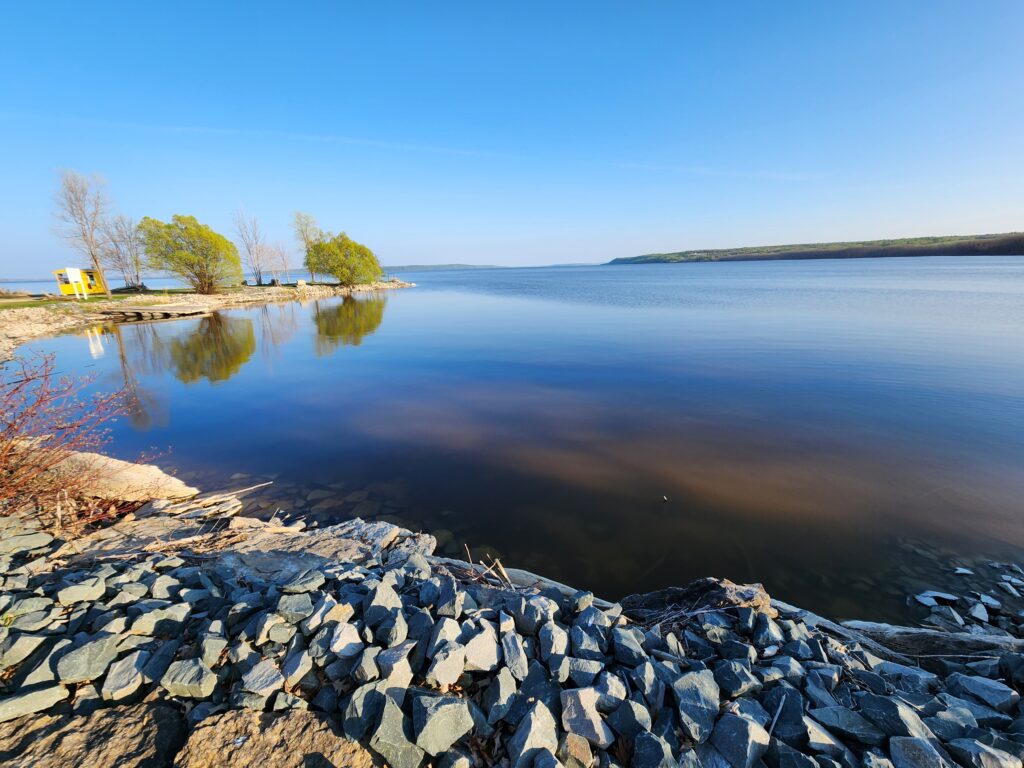
Although challenging at times (“so many things to see, so little time”), we tried to stick to the 3-3-3 rule of no more than 300 kilometres a day and to arrive at 3 PM. We didn’t regularly practise the 3rd rule of staying for 3 days but tried to ensure we had at least 2 nights in the exact location each week. We also tried to be more comfortable if our plans didn’t work out as anticipated. Although not necessarily worthy of posting to #vacationfail, I treasure the fascinating conversations and life stories shared by truckers and fellow travellers during our delays on the highway (one time for more than 10 hours) due to fires or road mishaps. I learned a lot getting out of our vehicle and just chatting!
5. Less is more
– Attributed to Ludwig Mies van der Rohe
A friend’s reminder to “pack once, check twice” before we headed out proved to be invaluable. One thing we will not take next time is our CDs. We had packed a small selection of our favourite music, believing we would listen to it during the long stretches of highway driving. We didn’t listen to one single CD — or tap into any other forms of entertainment — while on the road. The ever-changing vistas and companionship in the cab were all we needed. Although we did stream radio stations to catch the news at the end of the day, we chose to be “in the moment” as much as possible when in transit.
However, one item we will bring with us on our next trip is a dashcam. Looking back now, it would have been wonderful to capture images of the unfolding of that amazing scenery!
If you frequently send postcards, bring along a fine-tipped Sharpie pen. It works on all paper surfaces (and doesn’t smudge like some roller-ball gel pens do!).
I’m delighted to share these lessons from an RV road trip across Canada: friendship, history, being kind, slowing down, and doing more with less.
Happy Travels!
Related Articles
Why There is no Space to ‘Park’ in ON Parks
It is now well-recognized that outdoor recreation activities are very positive for our health; physical, social, and psychological. There is a global effort entitled Healthy People; Healthy Parks, of which Ontario Parks is a supporter. Ontario Provincial Parks...
What’s New for 2025 – Towables
The sales boom and bust from the pandemic are finally over. Frankly, that's good for all of us as RV shipments gradually return to standard numbers. That means pricing should stabilize, and some quality issues caused by hurry-up production during the pandemic...
Top 4 Things You Need To Boondock & Avoid The Crowds
If you are ready to go camping, but want to skip the crowds, then boondocking is the answer to your problems. To boondock, you just select a camping spot far off the grid, like on Crown land, then get busy having fun without worry about bumping into anyone else....