
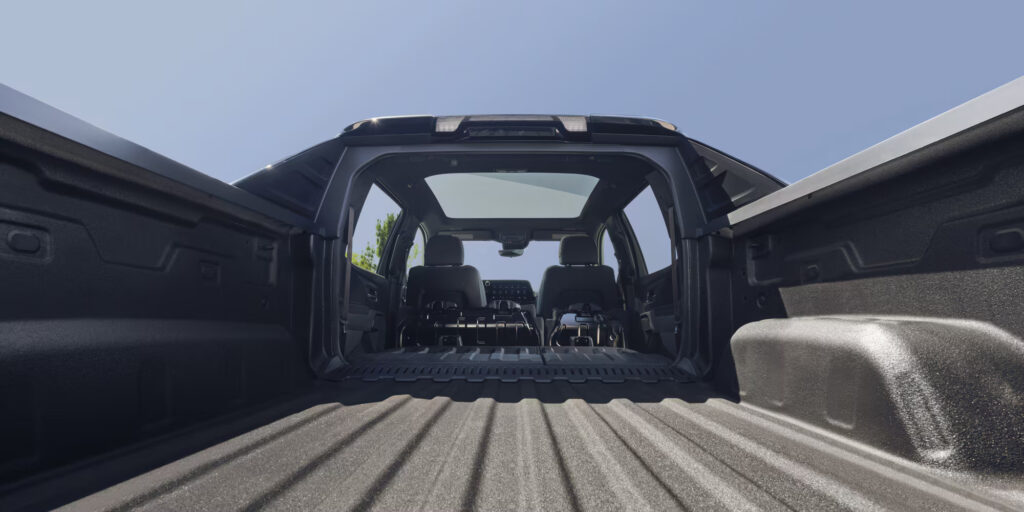
My first impression of the Silverado EV RST is how much it resembles the Chevy Avalanche of 20 years ago. Not only does it have a similar profile, but it also has a Midgate – that fold down rear cabin wall that opens the interior to the bed, giving you an overall cargo length of 10’10” (with the tailgate down).
The truck also features the multi-flex tailgate that adds to the versatility of the truck. These two design features alone demonstrate that the Silverado EV is first and foremost a truck, not just an electric one.
Perhaps it’s time we shift our focus away from batteries and start viewing the drive system as a supporting element rather than the centerpiece. After all it’s just one element of a truck’s build, and not even the key feature, after all trucks have jobs to do.
To that end I recently towed a 27-foot Airstream trailer (6,300 lb dry) with this electric truck. It’s ability to tow, for RVers, is the key concern not the fact of it being powered by electricity. Here are my impressions.
A Capable Truck That Happens to Be Electric
What makes an electric truck different from an internal combustion engine (ICE) truck is weight, how its distributed across the frame and how the power is delivered to the wheels. In each of these categories the EV is better.
Most people are surprised by this only because they have spent a lifetime working with ICE vehicles that have inherent design drawbacks. Heavy front ends and light rear ends. The EV is better because its weight is evenly distributed across the frame and that weight is incredibly low offering a good centre of gravity.
The overall weight of an EV truck is also higher, making it more stable. The electric power (torque) is evenly distributed front and back, to all wheels and the pulling power is consistent – there is no torque curve or turbo spool-up with an electric motor – 100% of the torque is available from the moment you touch the accelerator.
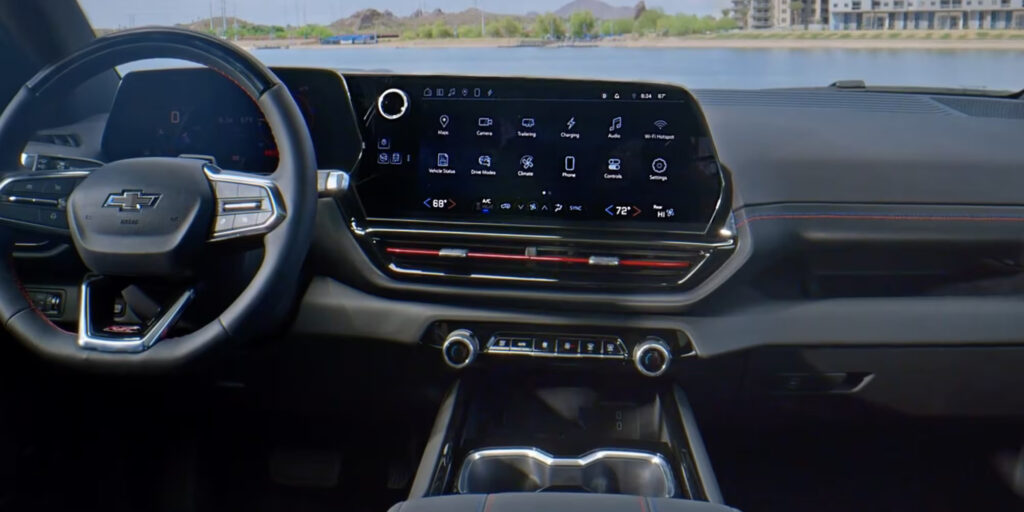
As for power overall – the Silverado EV (with the largest battery pack) provides a max towing of 12,500 lb and 2,100 lb of payload which translates to 725 horsepower and 775 lb-ft of torque. How does that affect acceleration? How about 0-100 kph in just over 4.5 seconds.
As for towing consumption, just like with an ICE vehicle the fuel economy is cut in half. Well, I found the same to be true towing the Airstream. Whereas my max range was 796 km empty; with the trailer on it dropped to just around 350 km. Recharging on the road took 35 minutes to an hour, depending on the level of charger available.
Chevy offers three sizes of battery packs including Standard, Extended and Max. Each of these is available in all four trim levels. The Max battery in my RST offered 796 kilometers of range – an industry leading number. I was able to drive from Toronto to Detroit, MI and back to London, ON without charging – as a result, I did not have to worry about where I would need to charge. Keep in mind, this trip was without a load and three of us riding in the truck.
Beyond the Battery: Everyday Benefits of the Silverado EV
There are also other benefits to this Silverado EV. First is a lower cost of ownership overall. An EV provides potential savings in yearly vehicle maintenance and fuel costs because it simply has fewer moving engine parts which means less scheduled maintenance.
Consider, no cooling system, no exhaust system, no oil changes – to mention a few. As for the battery, yes, they degrade over time – however GM provides a warranty that covers your battery for 8 years or 160,000 kilometres (100,000 miles).
Charging itself is getting better. Most owners opt to install a home charger. This unit charges overnight before your morning commute and for most it will be where they charge most of the time. For travel and longer trips – today there are over 250,000 public chargers across North America and that number is continuing to grow.
The power in your battery can also be used to run other things using the available PowerBase off-board power system. The Silverado EV can help you get more done with up to 10.2 kW of off-board power — and with the range reserve feature, you can set the range you need to get to your next destination, so you don’t run out of juice.
Below are a few other unique items available on this Silverado EV – most of which enhance the trailering experience.
Four-Corner Air Ride Adaptive Suspension: Silverado EV RST can automatically adjust the suspension to road conditions, resulting in a smooth ride or even adjust the height to help you get in and out easier.
Regen on Demand: This feature allows you to manually slow down your vehicle and converts some of the energy from your EV’s movement directly to the battery.
Four-Wheel Steer: Enjoy greater maneuverability and enhanced handling as all four wheels work together to provide a smaller turning radius, perfect for helping you make tight turns, parallel park or pulling into a narrow parking space.
Super Cruise: On average, Super Cruise users drive more than 10 million hands-free miles per month total. Just as impressive: Super Cruise driver assistance technology won MotorTrend Best Hands-Free Driving Tech, and yes it works while trailering.
Silverado EV includes standard Chevy Safety Assist; a suite of safety and driver assistance features that help you stay safe wherever you go.
-
-
- Automatic Emergency Braking
- Front Pedestrian Braking
- Lane Keep Assist with Lane Departure Warning
- Forward Collision Alert
- Following Distance Indicator
- IntelliBeam
-
After this experience, I’m almost ready to trade in my diesel!
Related Articles
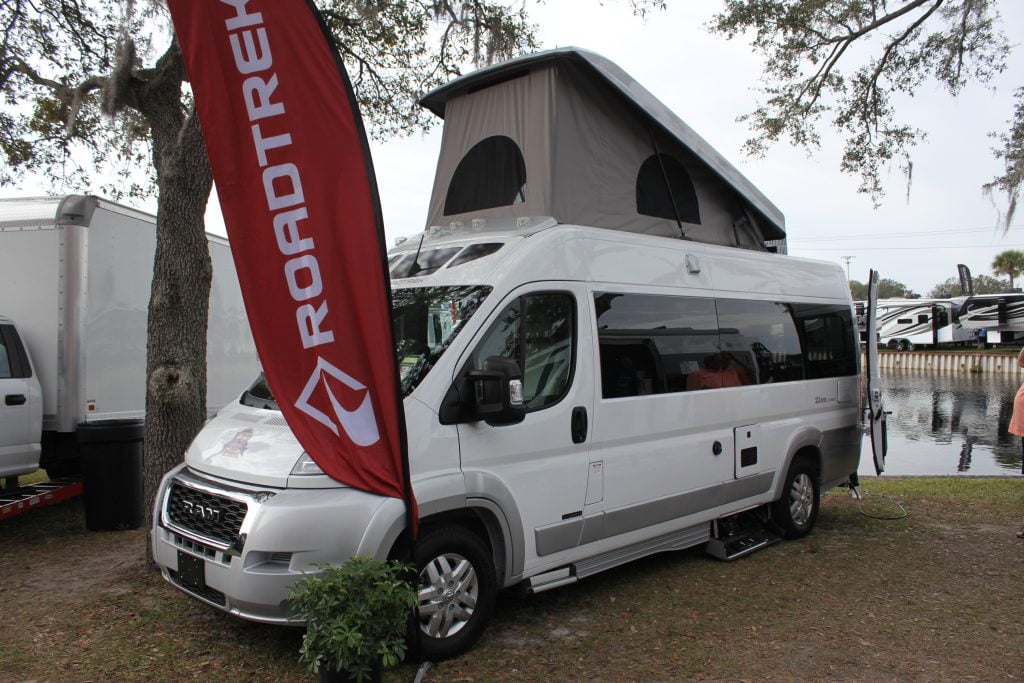
2023 Roadtrek Zion Slumber Class B
Discover the features and highlights of the 2023 Roadtrek Zion Slumber Class B camper. Explore its spacious interior, comfortable amenities, and innovative design, making it the perfect companion for your adventurous journeys. Experience the freedom and convenience of traveling in style with this state-of-the-art camper.

Enjoy Peace of Mind for Your RV with KYCS Locate
Having your beloved RV stolen is always a heartbreaking affair. But it is made much worse when it ends up deep in the woods ravaged by drug activity or simply never to be seen again. Thankfully, you can prevent those awful scenarios with help from KYCS Locate....
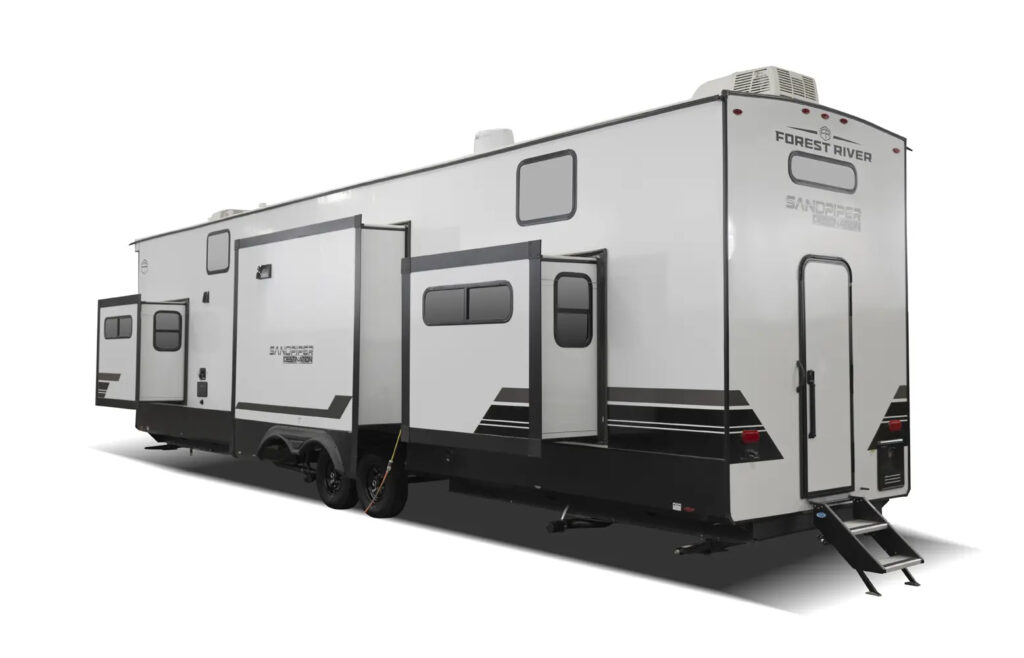
2025 Forest River Sandpiper 40D Destination Trailer
For many of us, the love of camping started early in life, often in a tent. Later, as desire, money and time allowed, we would move into pop-ups, travel trailers, and motorized RVs, each type tailored to our situations as life changed and our wanderlust grew. It...