For eight straight years from 2011 to 2019, my son Dale Jr. and I did an annual RV trip and wrote about it for the Explorer RV Club. We covered seven provinces and the state of Idaho and planned to continue, but then Covid hit and everything came to a halt. Later, Dale Jr. became a father and family man, and the opportunities to travel together diminished, but my yearning for RV travel did not. I am happy to report that this year I was once again able to hit the road, this time with my 18-year-old grandson Charlie as my travelling companion.
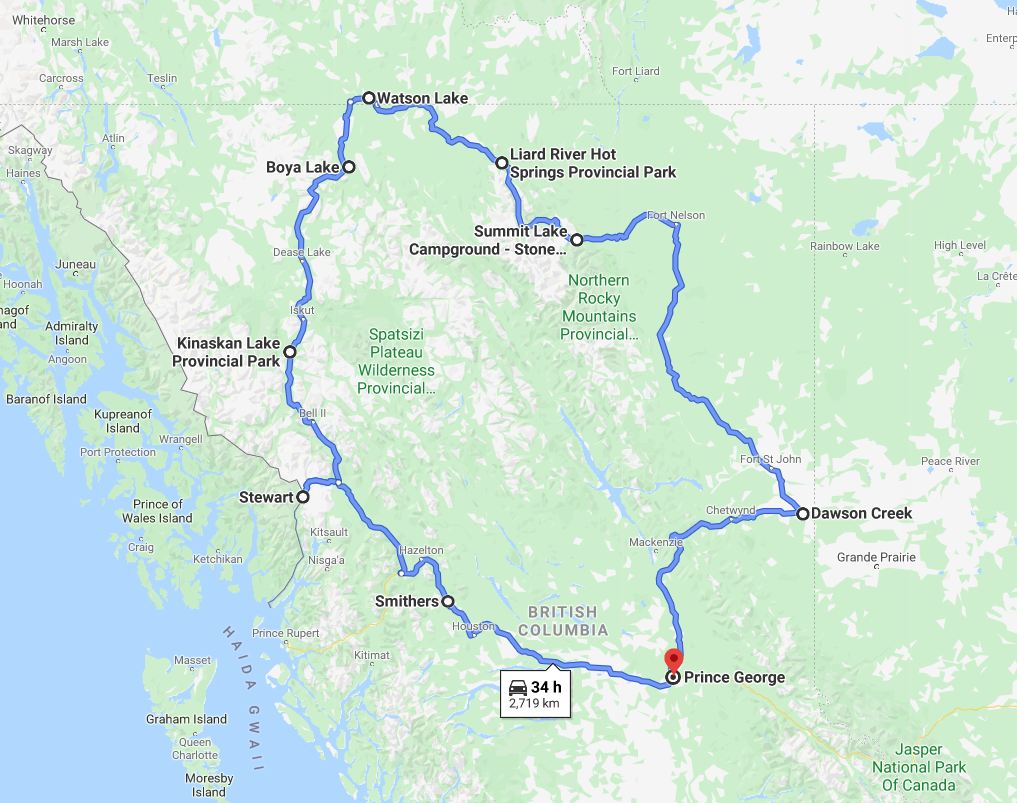
We chose to tackle British Columbia’s Great Northern Circle Route, which is an almost 3,200 km loop that starts and ends in Prince George. It traverses multiple mountain ranges and crosses mighty rivers in some of the remotest parts of the BC interior. The wildlife spotting opportunities are among the best to be found anywhere in this country, including black and grizzly bears, bison, elk, Stone Mountain sheep and more. The lakes and rivers are teeming with many species of salmon and trout, offering some great angling at a few provincial and private park sites. There are important National Historic Sites like Fort St. James and Barkerville to be explored, as well as a side trip into Alaska to view salmon spawning at Fish Creek. These are just a few of the reasons why the Great Northern Circle Route is becoming increasingly popular as an RV destination.
However, this is not a route to be undertaken without some advance planning. In places there are hundreds of kilometres between potential camping sites and reservations are often essential. In this article and the next two I will describe how to make this epic journey safely and enjoyably with recommendations for where to stop, where to eat and what to see and do along the way.
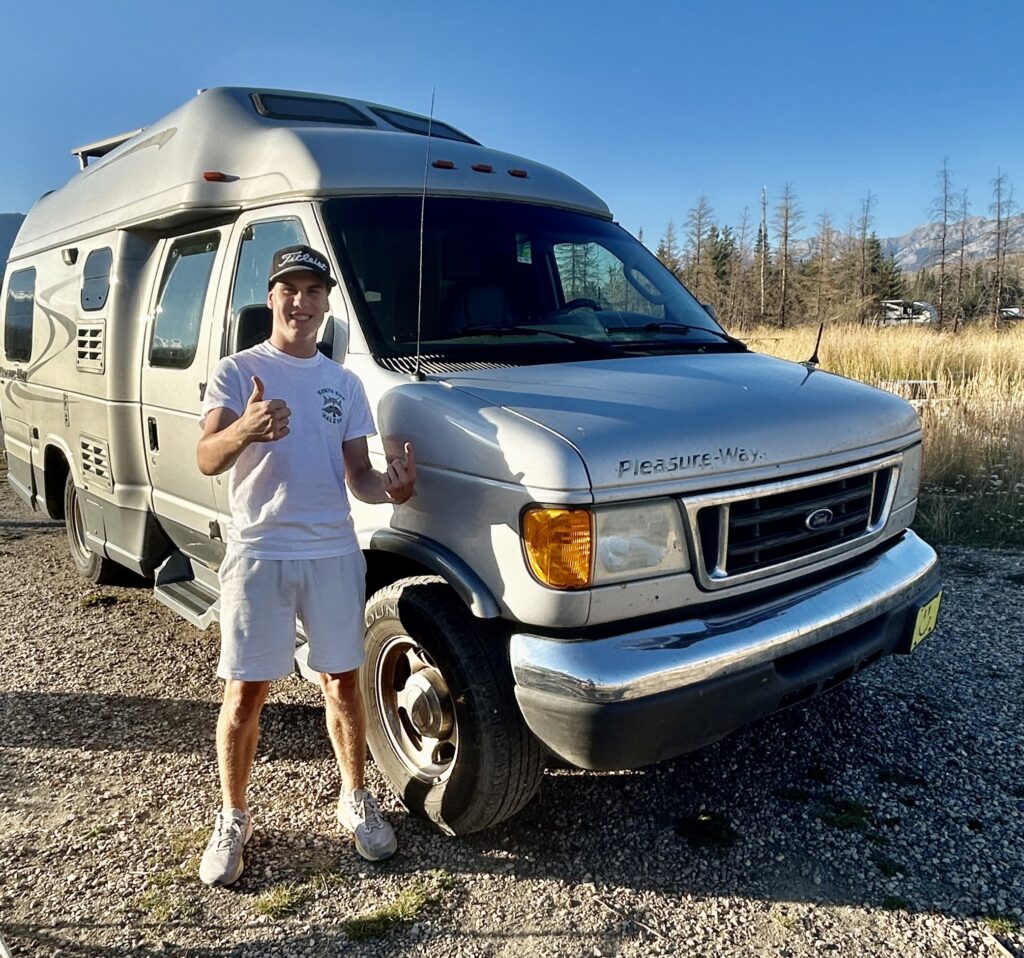
As noted, the Great Northern Circle Route begins and ends in Prince George, but first you must get there. Charlie and I flew into Edmonton, picked up a Class B Pleasure Way there and drove to Jasper for the first night. We had a chance to visit with Dale Jr., who now lives there, and to reminisce about our RV trips of the past.
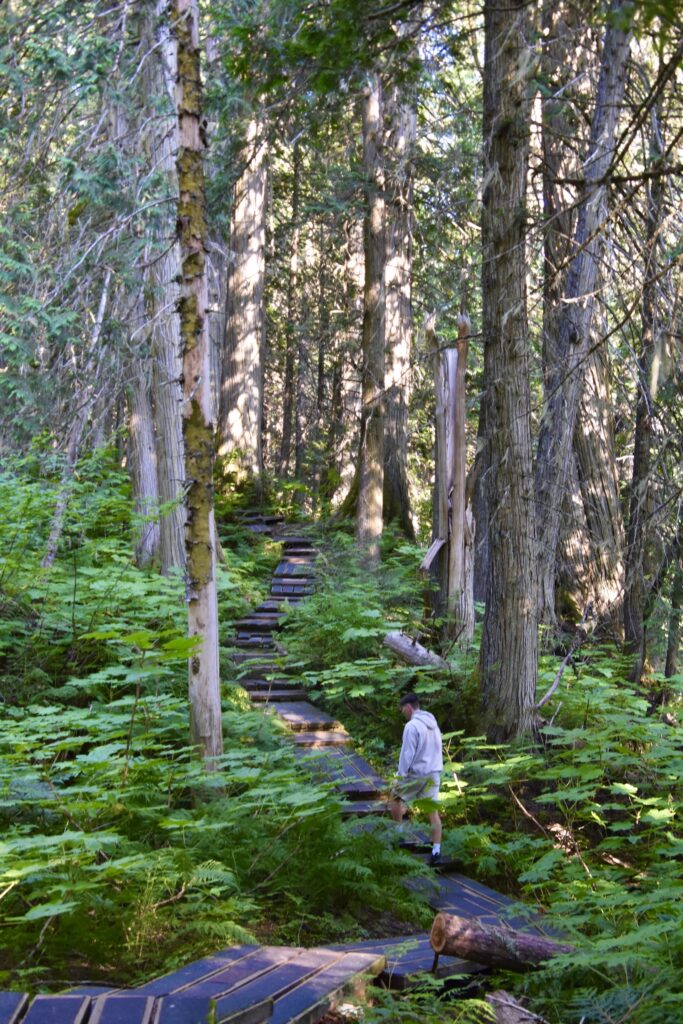
The next morning, we drove to Prince George, stopping at Ancient Forest Provincial Park along the way. Although technically this is not part of the Great Northern Circle Route, I highly recommend including this site in your itinerary. It features 1,000-year-old red cedars in the only temperate inland rain forest in the world. There is a 450-metre boardwalk that allows easy access to view these old-growth trees in a setting that is truly magnificent. In 2027, a new interpretive centre will open to make the experience even more memorable.
Prince George is a bustling city of over 75,000 at the confluence of the Fraser and Nechako Rivers that serves as the effective capital of Northern British Columbia. We opted to spend two nights here at the Salmon Valley Campground, which is just north of the city with a lovely location beside the Salmon River where you can swim or fish. After checking in, we returned to Prince George to visit the Central BC Railway Museum, which is a must for railway buffs like me. It has the largest collection of railway artifacts in Western Canada as well as forestry exhibits and is definitely worth spending an hour or two exploring.
Nearby is Trench Brewing which is a craft brewery with a BBQ and taco menu that will satisfy even the most devout carnivores, but there are also salads and other selections for non-meat eaters. Another popular choice in Prince George is the Wall of Fame sandwich shop which has some inventive sandwich and burger options.
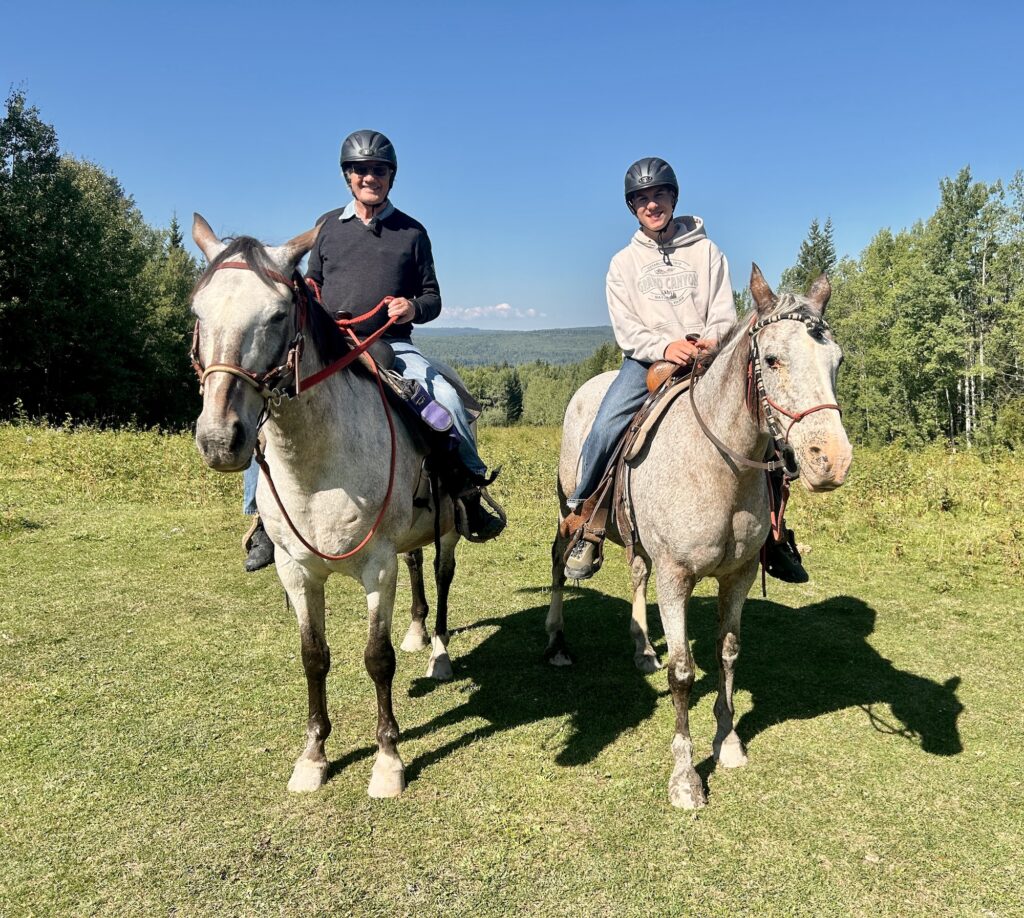
The reason we chose to spend an extra day in Prince George was to take a trail ride at El Shaddai ranch the next morning. Charlie had never been on a horse before and for him this was one of the highlights of the entire trip.
The next morning, we began the Great Northen Circle Route in earnest with Tumbler Ridge our final destination for the day. The route climbs steadily to Pine Pass where you cross the Continental Divide into Peace River country, the northernmost agricultural area in Canada. On the way is beautiful Bijoux Falls which is just off the highway not far from Azouzetta Lake where Café 97 is a mandatory stop for its famous donuts. This will also be your first of many opportunities to rent a canoe, kayak or paddleboard to enjoy the majesty of the mountain lakes that are among the highlights of the Great Circle Route. Chetwynd is the first major stop after Prince George and it is the world capital of chainsaw sculptures with over 200 to be found throughout the town. Each year a dozen wood sculptors are invited to compete and the entries for 2026 were on display near the Visitor Centre, including the winning entry featuring these Lego warriors.
In our next article, we’ll be sharing highlights from our travels through Dawson Creek and the Peace River Country, a relaxing stop at Liard Hot Springs, a visit to the iconic Watson Lake Sign Post Forest, and explorations of several remote parks in Northern British Columbia. From small-town charm to spectacular wilderness, this region offers some of the most memorable experiences in Western Canada.
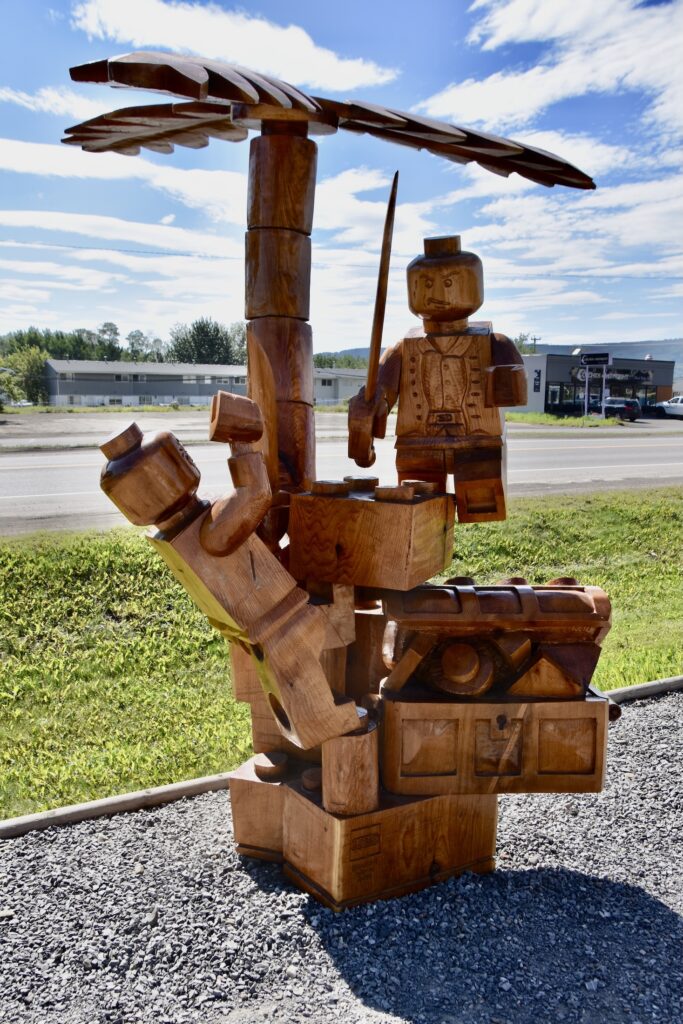
These sculptures are true works of art, and after getting a map of the locations of all of them from the Visitor Centre, you could easily spend hours photographing them before heading on. In 2027, there will be another dozen added.
Tumbler Ridge is a modern town that started out as a planned community in 1981 to exploit the abundant coal reserves in the area, but that didn’t last and the town looked like it was doomed until two teenage boys found dinosaur footprints in nearby Flatbed Creek in 2000. That led to a flurry of paleontology interest that revealed that the Tumbler Ridge area was one of the most significant sources of dinosaur fossils and tracks in the world. In 2015 an area of more than 3,270 square miles was designated as the Tumbler Ridge UNESCO Global Geopark, only the second in Canada. In the Visitor Centre you will find dozens of brochures detailing the many trails and protected areas within the geopark.
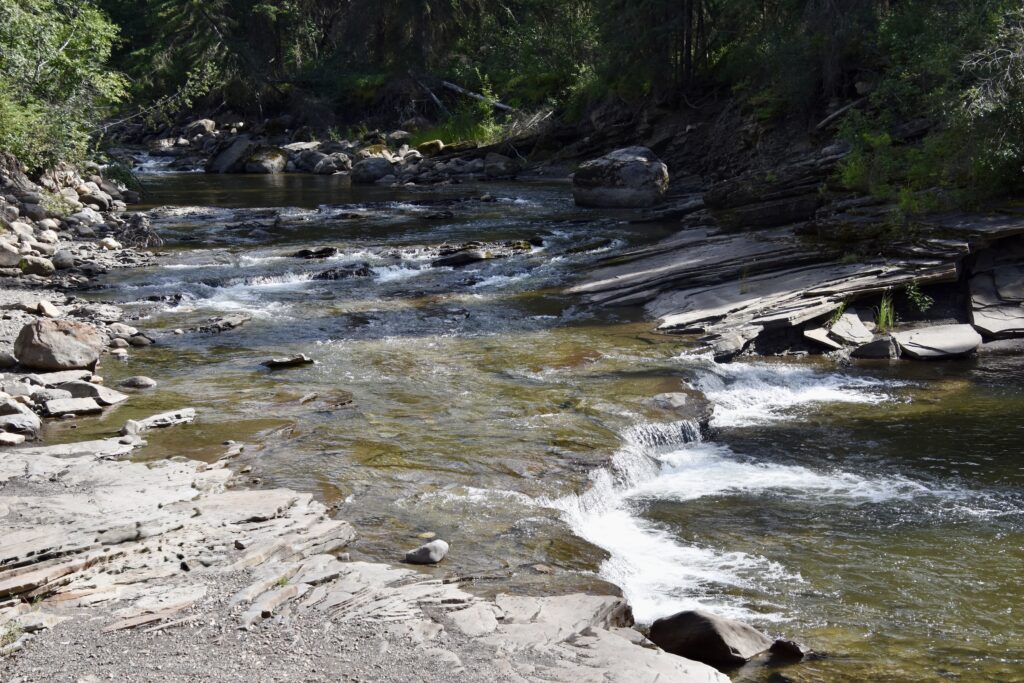
The most popular trail, Flatbed Pools, leads to the site where those first dinosaur tracks were found, and Charlie and I headed there after getting directions at the Visitor Centre. It is a 2 km hike each way and involves a fairly steep descent to Flatbed Creek, where the tracks of an ankylosaurus that were made almost 100 million years ago are plainly visible. Even without the tracks, this area is well worth the effort to get here.
Back in Tumbler Ridge, we visited the Tumbler Ridge Museum, where the Dinosaur Discovery Gallery has full-scale replicas of some of the dinosaurs that once roamed the area, including the ankylosaurus whose tracks saved this town from extinction after the mines closed. You can also see a cast of the very first track of a Tyrannosaurus rex ever found.
We spent the night at the Lions Flatbed Creek Campground which is just on the edge of town with a great location on the same creek where the first dinosaur tracks were found only a few kilometres away.
This was the perfect introduction to the Great Northern Circle Route and a reminder that some of Canada’s most remarkable destinations are found far from the well-travelled tourist paths. In the next installment, we continue north through the Peace Region toward Fort Nelson, where even more unforgettable landscapes, wildlife encounters, and northern adventures await.
Related Articles
Why There is no Space to ‘Park’ in ON Parks
It is now well-recognized that outdoor recreation activities are very positive for our health; physical, social, and psychological. There is a global effort entitled Healthy People; Healthy Parks, of which Ontario Parks is a supporter. Ontario Provincial Parks provide...
Hollywood Vintage Trailers: Classics Built for the Modern World
Reviving the classics is ubiquitous across every industry. From Dodge re-imagining the old Dart, to Disney mystifying new audiences with unforgettable stories. Heck, you can still be scolded by the unfortunate few who claim “Disco never died.” But amongst all the...
Canadian RV Innovators: Sweat, Tears, and the Rise of Van Life
Freedom Reimagined Freedom on the open road has always been a Canadian dream: through the Rockies, along Maritime coastlines, and deep into northern wilderness. In the past decade, that dream has taken a new shape: van life. Once a fringe idea, it has become a...